
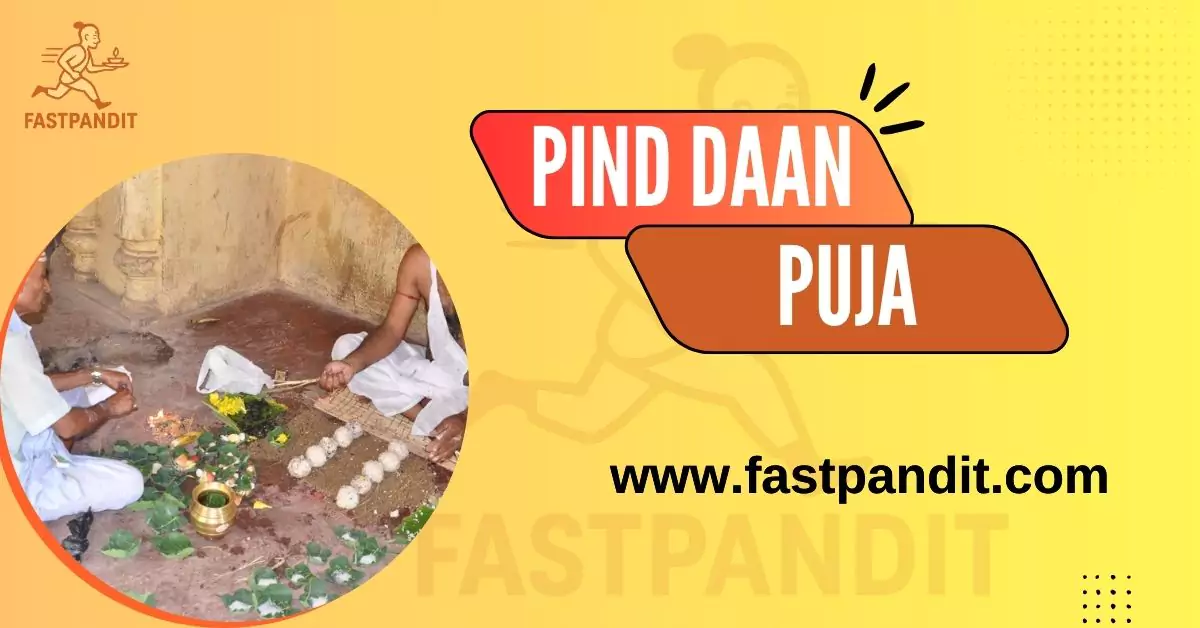
Hindus see life as a sacred journey where the soul moves from one birth to another until it finally achieves Moksha — liberation from the cycle of rebirth. Among the many rituals that guide this spiritual journey, Pind Daan Puja holds a very special place.
Pind Daan is not just a ritual; it is an act of love, gratitude, and responsibility towards one’s ancestors (Pitru). Through this ceremony, Hindus believe they can help the departed souls attain peace, release them from earthly attachments, and ensure that their blessings remain with the living family.
Hindus have practiced this tradition for thousands of years and continue to deeply respect it in Indian society. People from across the world — including Hindus living abroad — travel to sacred places in India to perform Pind Daan for their forefathers.
What is Pind Daan?
The word Pind means a round offering made of rice, barley flour, sesame seeds, and ghee, symbolizing the physical body of the departed soul. Daan means donation or offering.
So, Pind Daan is the act of offering food and prayers to the departed soul in order to provide them peace in the afterlife.
According to Hindu scriptures like the Garuda Purana and Matsya Purana, the soul after death remains in a subtle state and looks to the family for liberation through rituals. By performing Pind Daan, the living descendants fulfill their duty towards the departed and help them continue their journey toward Moksha.
Hindus believe that without Pind Daan, the soul may remain restless, wandering in search of closure. For this reason, every Hindu treats it as a sacred duty to perform for their parents, grandparents, and forefathers.
Why Pind Daan is Important
- Spiritual Liberation of Ancestors
Pind Daan ensures that the soul of the departed is freed from earthly bonds and can progress in its spiritual journey. - Blessings for the Family
Ancestors, when pleased, shower blessings of prosperity, good health, and harmony upon the family. - Relief from Pitru Dosha
Vedic astrology says that when people do not fulfill their ancestral obligations, their family may suffer from Pitru Dosha. This can bring obstacles in marriage, health, or financial matters. Performing Pind Daan helps remove such doshas. - Scriptural Duty
The Garuda Purana describes the Shraddha Karmas (rituals for ancestors) in detail, and Hindus consider skipping them disrespectful to the lineage. - Emotional Closure
For many families, Pind Daan is a way of expressing love and gratitude. It helps them cope with the grief of losing a loved one and gives a sense of peace.
When Should Performed Pind Daan ?
- Pitru Paksha (Fortnight of Ancestors):
The most auspicious time, usually falling in September–October (as per lunar calendar). - Tithi Shraddha:
On the death anniversary (tithi) of the departed soul. - Asthi Visarjan (Immersion of ashes):
Perform Pind Daan Immediately after cremation or immersion. - Special Muhurtas:
During solar or lunar eclipses, Amavasya (new moon), and holy pilgrimages.
According to ISKCON and several Vedic texts, performing it in Pitru Paksha holds the highest merit.
Who Can Perform Pind Daan?
Traditionally, the eldest son performs the ritual. If he is unavailable, other male members (brother, grandson) may perform it. However, in modern times, daughters too perform Pind Daan, especially if there is no male heir. This inclusiveness reflects changing times and the core Hindu belief that devotion, not gender, is what matters most.
How to Perform Pind Daan (Step-by-Step)
The ritual is usually guided by a trained priest (Pandit). Here’s a simplified outline:
- Purification & Sankalp (Resolution):
The devotee takes a bath and wears clean clothes. Then makes a vow (Sankalp) to perform Pind Daan for specific ancestors. - Preparation of Pinds:
Small round balls (Pind) are made from rice, barley flour, sesame seeds, honey, and ghee. - Invocation of Ancestors:
The Pandit chants mantras to invite the souls of the ancestors. - Offering the Pinds:
The Pinds are placed on kusha grass or a plate and offered with water (tarpan). This symbolizes feeding and satisfying the soul. - Donation & Feeding Brahmins/Cows:
Food, clothes, or donations are given to Brahmins, poor people, and cows as a form of charity. - Final Prayers:
The ritual ends with prayers for peace, forgiveness, and blessings.
This ceremony usually takes 1–2 hours depending on the tradition of the place.
Famous Places to Perform Pind Daan in India
India is dotted with sacred spots where Pind Daan is considered especially powerful. Each place has its own mythological significance.
1. Gaya, Bihar
The most famous place for Pind Daan. According to the Vishnupad Purana, Lord Vishnu himself blessed Gaya as the land where ancestors attain liberation. Bihar Tourism recognizes Gaya as the prime pilgrimage spot for Shraddha rituals.
2. Varanasi, Uttar Pradesh
Known as the city of Lord Shiva, Varanasi holds immense spiritual power. Performing Pind Daan here ensures Moksha for ancestors, as Shiva whispers the Taraka Mantra to every departing soul.
3. Prayagraj (Allahabad), Uttar Pradesh
The holy Sangam (confluence of Ganga, Yamuna, and Saraswati) is believed to cleanse all sins. Many families prefer doing Pind Daan here during Magh Mela.
4. Haridwar, Uttarakhand
Situated on the banks of the Ganga, Haridwar is considered a gateway to the heavens. Rituals here are believed to bring instant peace to departed souls.
5. Nashik, Maharashtra
Nashik, associated with Lord Rama, is one of the top five Shraddha places in India. The sacred Godavari river adds to its purity.
6. Badrinath, Uttarakhand
One of the Char Dham sites. Performing Pind Daan here, in the presence of Lord Vishnu, is considered highly auspicious.
7. Rameshwaram, Tamil Nadu
Connected to Lord Rama’s story in the Ramayana, this place is considered very powerful for ancestral rituals.
8. Gokarna, Karnataka
This coastal temple town is famous for rituals to remove Pitru Dosha and perform Pind Daan.
9. Kurukshetra, Haryana
Known for the Bhagavad Gita, it is also a holy site for Shraddha rituals.
10. Siddhpur, Gujarat
Dedicated to Mata Kapilani, this is one of the rare places where rituals for the mother’s soul are performed.
Pind Daan in Modern Times
With globalization, many Hindus live abroad and cannot travel to India often. To address this, temples and priests now offer online Pind Daan bookings. Families can book priests in Gaya, Varanasi, or Haridwar, and the rituals are performed on their behalf. Some services even provide live video streaming for families abroad.
This modern adaptation ensures that no matter where you are, you can fulfill your duty towards your ancestors.
Frequently Asked Questions (FAQs)
Q1. Can daughters perform Pind Daan?
Yes. While tradition favored sons, modern times have seen daughters also taking this responsibility, especially in the absence of sons.
Q2. Is it compulsory to go to Gaya for Pind Daan?
Not compulsory, but Gaya holds the highest significance. Other places like Varanasi, Haridwar, and Rameshwaram are also considered sacred.
Q3. What should one wear during Pind Daan?
Simple, traditional, and clean clothes. Men often wear dhoti, and women wear saree or salwar.
Q4. Can non-Hindus perform or participate?
While the ritual is deeply rooted in Hindu traditions, people of other faiths sometimes accompany family members out of love and respect.
Q5. How long does it take?
Usually 1–2 hours, depending on the priest and the rituals chosen.
Practical Tips for Devotees
- Always book a trusted priest in advance, especially during Pitru Paksha.
- Carry essential items like rice, black sesame, ghee, flowers — though most priests provide them.
- Avoid lavishness; focus on sincerity.
- If abroad, check for authentic online booking services linked to reputed temples.
- Remember: the purity of intention is more important than the grandeur of the ritual.
Conclusion
Pind Daan Puja is more than a religious formality — it is a sacred bond between the living and the departed. By performing it, families not only honor their ancestors but also invite blessings for generations to come.
Whether at Gaya, Haridwar, or even through online rituals, what truly matters is devotion and respect.
As the ancient texts remind us: “By satisfying the ancestors, the gods are pleased; by pleasing the gods, the entire universe supports you.”
May performing Pind Daan bring peace to your ancestors and prosperity to your family.
Credible Resources for Further Reading: